Adam as Spirit, Then Flesh: An Original Reading of Genesis 1–3
I. Before the Garden: The Story Begins
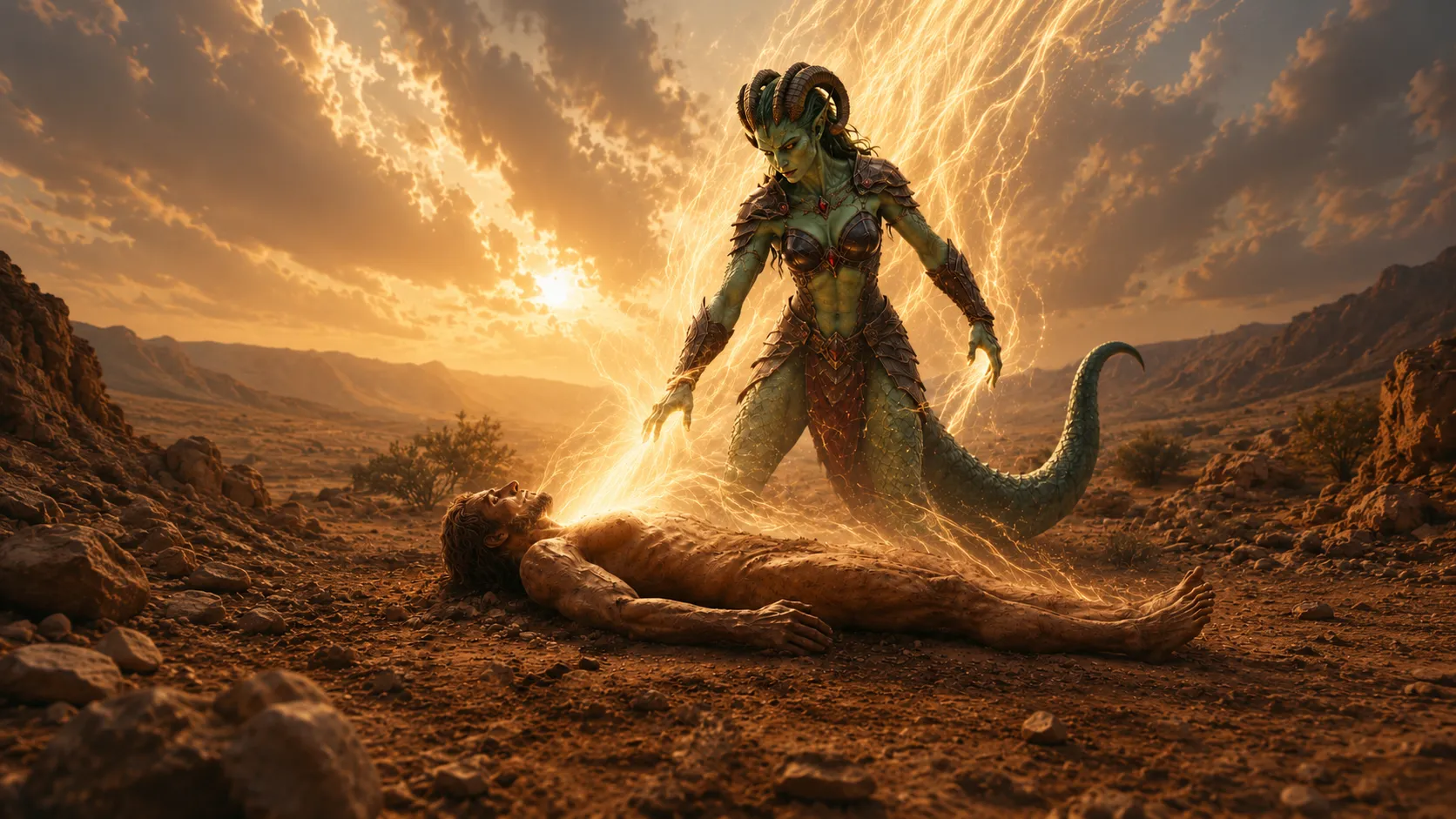
One God creates a single, continuous Adam across two sequential stages, told across two chapters of the same story. In Genesis 1, Adam exists as spirit — a real, particular being, not yet material. In Genesis 2, that same Adam is enclosed in a material body, and Eve is subsequently drawn from it. The two are fully human and fully embodied from this point forward, sustained in a deathless state by ongoing access to the Tree of Life. Death enters the human story only at the expulsion from Eden, when access to that tree is explicitly and deliberately withdrawn — not because embodiment itself is a corruption, a fall, or a lesser state, but because a specific, named privilege is revoked.
II. Genesis 1: Adam as Spirit
One God creates Adam, the precursor to the material version, in spirit. This is Adam himself — the same particular individual who appears later in Genesis 2 — existing prior to his embodiment, not an abstraction or a category standing in for humanity in general. God creates him “in his own image,” and at this stage that image is unembodied: no flesh, no material form, no location in the garden yet. Genesis 1 establishes that Adam exists as a real, singular being from the very first day this is described, before the story ever turns to dust, forming, or gardens.
III. Genesis 2 (and 3): Adam Enclosed in Matter
God then creates the material version of Adam, and breathes the spirit version — already created in Genesis 1 — into it. This is not the replacement of the spiritual Adam with a different, physical Adam; it is that same Adam taking on a body. Eve is subsequently formed from Adam’s body, after this enclosure has already happened. From this point forward, in Genesis 2 and into Genesis 3, Adam and Eve are fully human, fully embodied — not partial or unfinished beings — and they are kept alive indefinitely by their access to the Tree of Life. Death is not yet part of their condition; it is being held off by something specific and namable. When they are expelled from the garden in Genesis 3, the text is explicit about why: God must prevent them from also eating from the Tree of Life and living forever. Mortality enters at that exact point, for that exact stated reason — not because their bodies are suddenly corrupted or because embodiment itself was the problem, but because a specific source of unending life has been placed permanently out of reach.
Where This Stands on Scholarly Consensus
Part of this thesis lines up with a real position among Old Testament scholars; part of it requires departing from a common reading of one specific verse, for good logical reason.
- Old Testament scholar John Day states plainly that among Old Testament scholars, the majority view today is that Adam and Eve were mortal in the Garden, as implied by Genesis 3:22 — meaning natural mortality is the text’s default assumption for the human body, not an added punishment. This supports the thesis: Adam’s body, formed from dust, was mortal by nature from the moment of its creation in Genesis 2.
- John Walton points to Genesis 3:19 — “you are dust, and to dust you shall return” — as evidence that this mortality was tied to physical constitution from the start, and argues that the Tree of Life would serve no purpose in the garden at all if the body were already immortal on its own. This also supports the thesis directly: the tree has to be doing real, active work against a genuinely mortal body, which requires it to have already been in use.
- Where this thesis departs from a common reading: some scholars take the word “also” in Genesis 3:22 (“lest he reach out his hand and take also from the tree of life”) to mean Adam had never yet eaten from it. That reading does not hold up logically. If the body was mortal by nature and the Tree of Life was the only thing preventing death, then death could only have been held off by actually eating from it, not by its mere presence nearby. A tree that could stop death but was never used would not explain why Adam and Eve were not already aging and dying before the events of Genesis 3. The better reading of “also” is cumulative, not temporal: don’t let him also — in addition to the moral awareness just gained from the Tree of Knowledge — keep drawing on the Tree of Life, since that combination would fix a now-morally-awakened, still-mortal-by-nature being into a permanent immortal state. On this reading, Adam and Eve were eating from the Tree of Life continuously from the start; that ongoing consumption is what kept a mortal body alive without end, and it is that ongoing access — not a first-time opportunity — that gets shut off at the expulsion.
This is the more internally consistent position: it is Genesis 3:19 and the mortal-by-nature consensus that ground the thesis, while the specific “also means never yet eaten” gloss on 3:22 is set aside as logically incompatible with a body that is mortal by nature and dependent on the tree for continued life.