Against the Rock: Why Matthew 16:18 Betrays the Jesus of the Gospels
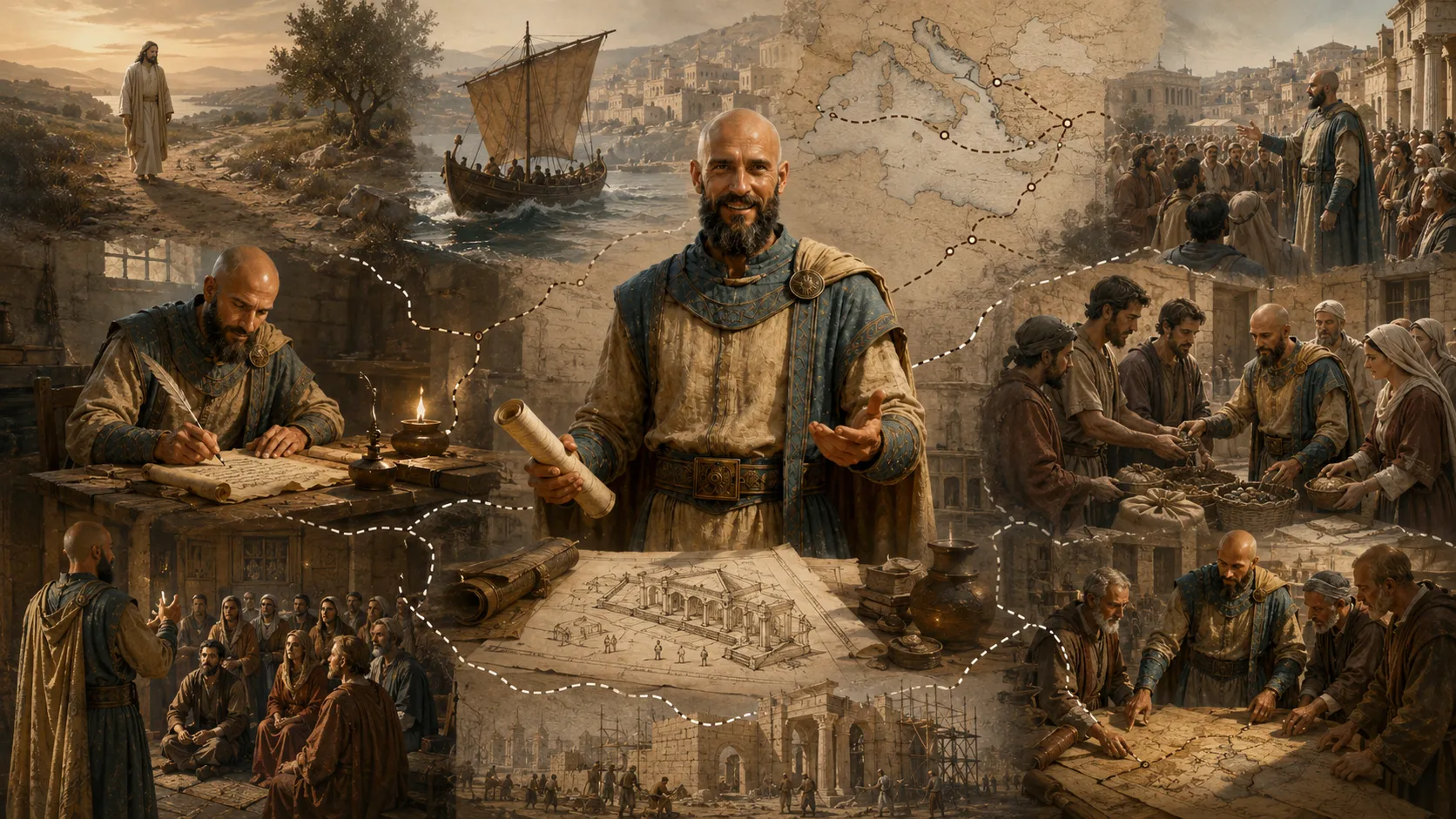
Preface
The Jesus depicted across Mark, Luke, and John is fundamentally at odds with the institution-founding Jesus of Matthew 16:18, and that the “church” as it developed owes far more to Paul than to the man Paul claimed to follow.
Matthew 16:18 describes Jesus as telling Peter that he will be the rock upon which Jesus builds his church.
“κἀγὼ δέ σοι λέγω ὅτι σὺ εἶ Πέτρος, καὶ ἐπὶ ταύτῃ τῇ πέτρᾳ οἰκοδομήσω μου τὴν ἐκκλησίαν, καὶ πύλαι ᾅδου οὐ κατισχύσουσιν αὐτῆς.”
“And I tell you, you are Peter, and on this rock I will build my church, and the gates of Hades shall not prevail against it.” — Matthew 16:18
Bolded above is the phrase that launched an institution: oikodomēsō mou tēn ekklēsian — “I will build my church.” It is one verse, spoken in one Gospel, and it has been asked to carry the weight of two thousand years of hierarchy, real estate, taxation, and empire. This essay argues that it cannot bear that weight — because the man to whom it is attributed spent his ministry doing the opposite of what the verse claims he wanted.
I. A Word Found Nowhere Else
The Greek word translated “church” — ἐκκλησία (ekklēsia, literally “an assembly called out”) — appears exactly twice in all four Gospels, and both instances are in Matthew: 16:18 and 18:17. Mark, Luke, and John — three independent witnesses to the same ministry — never once put the word in Jesus’s mouth. Not at the Last Supper. Not on the cross. Not in any resurrection appearance.
If Jesus had genuinely announced, in the middle of his ministry, that he intended to found a permanent institution — a building program, a chain of command, a gatekeeping structure — it is a strange silence that Mark, Luke, and John all failed to mention it. What we have instead is a single Matthean insertion, written decades after the events, into a narrative otherwise devoted to a very different Jesus: an itinerant critic of religious institutions who owned no property and founded no organization.
II. The Man Who Actually Built the Church: Paul
Whatever “the church” became, it was not Jesus’s résumé. It was Paul’s.
| Task | Who did it |
|---|---|
| Physically planted congregations across Asia Minor, Greece, and Rome | Paul (Acts 13–20) |
| Wrote the letters that instructed converts how to behave, worship, and organize | Paul (Romans, 1–2 Corinthians, Galatians, etc.) |
| Insisted believers must not neglect assembling together | Traditionally attributed to Paul — Hebrews 10:25, “μὴ ἐγκαταλείποντες τὴν ἐπισυναγωγὴν ἑαυτῶν” (“not forsaking the assembling of ourselves together”) — though modern scholarship widely doubts Pauline authorship of Hebrews itself |
| Organized systematic financial giving to the movement | Paul — 1 Corinthians 16:1–2, instructing believers to set aside a portion of income “on the first day of every week” for “the collection for the saints” |
| Defended, defined, and policed the boundaries of who belonged inside these communities | Paul — Galatians, 1 Corinthians 5 (expelling a member), 2 Corinthians (defending his own apostolic authority) |
Paul is the architect, the fundraiser, the by-laws committee, and the head office. Jesus, in the other three Gospels, is none of these things. The theology of “church” is Pauline theology retrofitted onto Jesus through a single verse in a single Gospel written for a specific, institutionally-minded community.
III. The Jesus Who Actually Appears in the Gospels
Set the “church-building” Jesus of Matthew 16:18 next to the Jesus who shows up everywhere else, and the contradiction is not subtle.
1. He never prays in the Temple
Jesus teaches in the Temple courts and debates there, but in every prayer scene the Gospels give us, he withdraws from institutional space entirely — a mountainside (Matthew 14:23), a garden (Mark 14:32–35), a “lonely place” (Mark 1:35, Luke 5:16). The one time he addresses prayer directly, he tells people to do the opposite of public, institutional piety:
“καὶ ὅταν προσεύχῃ, οὐκ ἔσῃ ὥσπερ οἱ ὑποκριταί, ὅτι φιλοῦσιν ἐν ταῖς συναγωγαῖς καὶ ἐν ταῖς γωνίαις τῶν πλατειῶν ἑστῶτες προσεύχεσθαι, ὅπως φανῶσιν τοῖς ἀνθρώποις… σὺ δὲ ὅταν προσεύχῃ, εἴσελθε εἰς τὸ ταμεῖόν σου.”
“And when you pray, you must not be like the hypocrites, for they love to stand and pray in the synagogues and at the street corners, that they may be seen by others… But when you pray, go into your room and shut the door.” — Matthew 6:5–6
The instruction is not “build a house of prayer.” It is: leave the institution, close the door, and pray alone.
2. He resists the Pharisees and Temple elders — by name
“πάντα δὲ τὰ ἔργα αὐτῶν ποιοῦσιν πρὸς τὸ θεαθῆναι τοῖς ἀνθρώποις… φιλοῦσιν δὲ τὴν πρωτοκλισίαν ἐν τοῖς δείπνοις καὶ τὰς πρωτοκαθεδρίας ἐν ταῖς συναγωγαῖς καὶ τοὺς ἀσπασμοὺς ἐν ταῖς ἀγοραῖς.”
“They do all their deeds to be seen by others… they love the place of honor at feasts and the best seats in the synagogues and greetings in the marketplaces.” — Matthew 23:5–7 (compare Mark 12:38–39, Luke 20:46)
This is not incidental color. It is a direct, repeated, three-Gospel indictment of religious leadership as status theater.
3. He mocks performative piety, public and private
Matthew 6:1–2 widens the target beyond the Temple elite to anyone who performs generosity “so that they may be praised by others,” and Matthew 23:27–28 escalates it into an accusation of rot beneath a clean surface:
“παρομοιάζετε τάφοις κεκονιαμένοις, οἵτινες ἔξωθεν μὲν φαίνονται ὡραῖοι, ἔσωθεν δὲ γέμουσιν ὀστέων νεκρῶν καὶ πάσης ἀκαθαρσίας.”
“You are like whitewashed tombs, which outwardly appear beautiful, but within are full of dead people’s bones and all uncleanness.” — Matthew 23:27
4. He condemns tithing itself as a symptom of missing the point
“ἀποδεκατοῦτε τὸ ἡδύοσμον καὶ τὸ ἄνηθον καὶ τὸ κύμινον, καὶ ἀφήκατε τὰ βαρύτερα τοῦ νόμου, τὴν κρίσιν καὶ τὸ ἔλεον καὶ τὴν πίστιν.”
“You tithe mint and dill and cumin, and have neglected the weightier matters of the law: justice, and mercy, and faithfulness.” — Matthew 23:23
This is not a call for a better-run tithing system. It is an explicit statement that the entire practice — precise, rule-bound, percentage-based giving to a religious institution — has substituted for the actual moral demand: justice and mercy toward the poor.
5. The widow’s two coins, against the Temple’s rich
“καὶ πάντες γὰρ ἐκ τοῦ περισσεύοντος αὐτοῖς ἔβαλον, αὕτη δὲ ἐκ τῆς ὑστερήσεως αὐτῆς πάντα ὅσα εἶχεν ἔβαλεν, ὅλον τὸν βίον αὐτῆς.”
“For they all contributed out of their abundance, but she out of her poverty has put in everything she had, all she had to live on.” — Mark 12:44 (compare Luke 21:1–4)
Read against the grain of centuries of pious use as a stewardship parable, the passage sits directly beside Jesus’s warning, one verse earlier, about scribes who “devour widows’ houses” (Mark 12:40). The Temple treasury she gives to is the very institution just accused of consuming women like her.
6. He attacks the Temple system itself, not just its abuses
The Temple in first-century Judea was not merely a building; it was an economy. Purification required payment. Childbirth required a purification offering (Luke 2:22–24). Healing required a priestly certification and sacrifice — Jesus tells the cleansed leper:
“ὕπαγε σεαυτὸν δεῖξον τῷ ἱερεῖ καὶ προσένεγκε περὶ τοῦ καθαρισμοῦ σου καθὼς προσέταξεν Μωϋσῆς.”
“Go, show yourself to the priest and offer for your cleansing what Moses commanded.” — Mark 1:44 (Matthew 8:4, Luke 5:14)
— even as the overturned-tables scene makes clear what Jesus thought of the commerce this system generated:
“γέγραπται, Ὁ οἶκός μου οἶκος προσευχῆς κληθήσεται, ὑμεῖς δὲ αὐτὸν ποιεῖτε σπήλαιον λῃστῶν.”
“It is written, ‘My house shall be called a house of prayer,’ but you make it a den of robbers.” — Matthew 21:13 (Mark 11:17, Luke 19:46)
6a. He calls it “a house of prayer” — and never once prays there
The accusation Jesus levels at the Temple borrows its authority from Isaiah 56:7: “my house shall be called a house of prayer.” Whether these are his own words or the Gospel writer’s theological framing laid onto the scene, the label stands unchallenged in the text — the Temple is, by its own defenders’ and its own critics’ account, the house of prayer.
And yet in all four Gospels, Jesus is never once shown praying inside it. Every narrated prayer scene — Gethsemane, the mountainside, the “lonely place” — happens away from the building the label describes. This is not merely consistent with his teaching; it is his teaching, stated as an explicit instruction to everyone who would follow him:
“σὺ δὲ ὅταν προσεύχῃ, εἴσελθε εἰς τὸ ταμεῖόν σου, καὶ κλείσας τὴν θύραν σου πρόσευξαι τῷ πατρί σου τῷ ἐν τῷ κρυπτῷ.”
“But when you pray, go into your room and shut the door and pray to your Father who is in secret.” — Matthew 6:6
The instruction is not “go to the house of prayer.” It is: go to a private room, alone, and shut the door. Jesus follows his own instruction without exception. He does not follow the Temple’s advertised function for itself. If the building he calls “a house of prayer” were, to him, actually the place where prayer belongs, the model he sets and the instruction he gives should point there. They point everywhere else instead.
And beyond reforming the commerce, the Gospels have him predicting the building’s total destruction:
“λέγω ὑμῖν, οὐ μὴ ἀφεθῇ ὧδε λίθος ἐπὶ λίθον ὃς οὐ καταλυθήσεται.”
“Not one stone will be left upon another that will not be thrown down.” — Matthew 24:2 (Mark 13:2, Luke 21:6)
John’s Gospel goes further and puts destruction in Jesus’s own stated intention, not merely his prophecy:
“λύσατε τὸν ναὸν τοῦτον, καὶ ἐν τρισὶν ἡμέραις ἐγερῶ αὐτόν.”
“Destroy this temple, and in three days I will raise it up.” — John 2:19
The accusation resurfaces at his trial precisely because witnesses remembered him saying something like it (Mark 14:58, Matthew 26:61) — an itinerant preacher whose reputation, even among hostile witnesses, was that he threatened the central religious institution of his people, not that he promised to found a new one.
IV. The Contradiction Stated Plainly
Matthew 16:18 asks readers to believe that the same man who:
- refused the Temple’s prayer economy,
- named its leadership corrupt to their faces,
- said tithing itself distracted from justice and mercy,
- held up a poor widow’s total, un-tithed generosity against the wealthy’s institutional giving,
- and prophesied — even reportedly promised — his own hand in the Temple’s destruction.
Matthew 16:18 has him turn around and say, in effect: build another one, and put a man in charge of it. The verse does not develop naturally out of anything else Jesus says. It develops naturally out of what the church that produced Matthew’s Gospel needed him to have said.
Conclusion
The Jesus of Mark, Luke, and John is a dismantler of religious institutions, not a founder of one. He identifies the Temple economy — its fees, its tithes, its best seats, its performative prayer — as the very obstacle to the justice and mercy he claims God actually wants. He is reported, across independent sources, as threatening the Temple’s destruction, not planning its replacement with a new franchise.
Paul, not Jesus, built the church: he planted the congregations, wrote the operating manual, organized the collections, and defended the boundaries of membership. Matthew 16:18 is the one thread that lets later Christianity claim Jesus authorized this — a single verse, in a single Gospel, using a word the other three Gospels never let him say.
The Jesus of the temple-tirades, the whitewashed-tomb accusations, and “not one stone upon another” is not a man who would bless the Vatican. He would do what he did the first time: walk in, and start turning over tables.