The Question from Prison: What John the Baptist's Doubt Reveals
I. The Premise
John the Baptist was born a Jew, raised on Jewish stories, and immersed his whole life in Jewish expectation. Like every Jewish child of his generation, he would have grown up hearing about the Messiah — not as an abstract theological idea, but as a living hope tied to real, visible outcomes: the ingathering of exiles, the rebuilding of what was broken, the end of oppression, a world set right under God. This was not a vague spiritual comfort. It was a concrete national and political expectation, passed down through generations who had waited, suffered, and waited again.
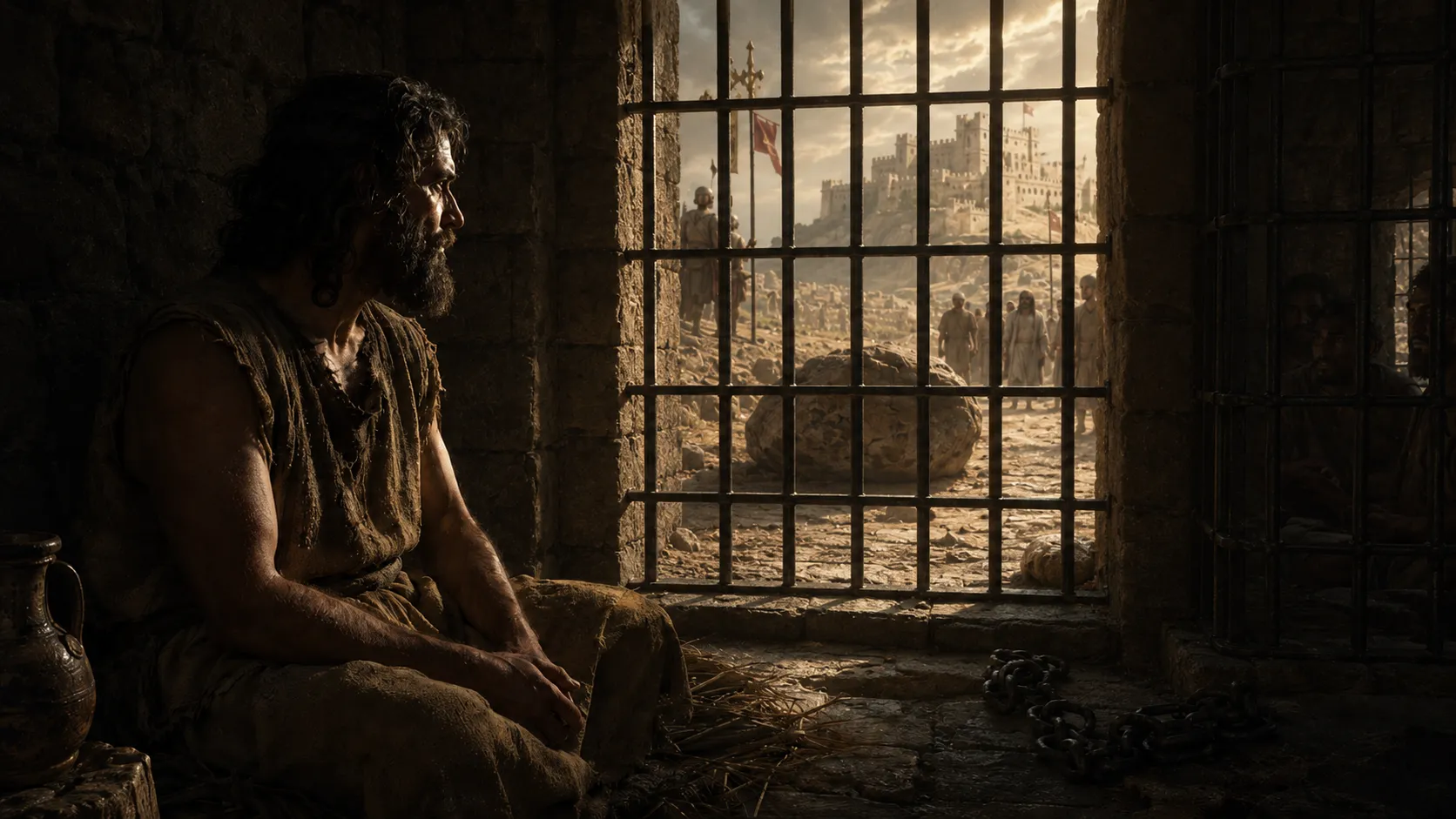
By the time John was preaching at the Jordan, he was already understood by many to be a forerunner — the one preparing the way. He had reportedly identified Jesus in some capacity tied to this expectation. And then Herod threw him in prison.
This is the detail worth sitting with: John, sitting in a cell, was still waiting. If he truly believed Jesus was the Messiah in the full Jewish sense, he would have expected liberation — not necessarily magical rescue, but the arrival of the promised redemption that a Messiah was supposed to bring. Prisoners freed. Oppressors deposed. The world visibly changing. Instead, John sat in prison, and nothing changed. So he sent people to ask, directly: are you the one, or should we look for someone else?
That question is the hinge of this whole article. A man doesn’t ask “are you really him?” if the answer is already obviously yes. John’s doubt is data.
II. The Christian Account: Greek, English, and the Words That Matter
This episode is preserved in Matthew and Luke (it isn’t in Mark — scholars trace it to the shared “Q” material used by both Matthew and Luke).
Matthew 11:2–6 (KJV)
Now when John had heard in the prison the works of Christ, he sent two of his disciples, and said unto him, Art thou he that should come, or do we look for another? Jesus answered and said unto them, Go and shew John again those things which ye do hear and see: The blind receive their sight, and the lame walk, the lepers are cleansed, and the deaf hear, the dead are raised up, and the poor have the gospel preached to them. And blessed is he, whosoever shall not be offended in me.
Luke 7:18–23 (KJV)
And the disciples of John shewed him of all these things. And John calling unto him two of his disciples sent them to Jesus, saying, Art thou he that should come? or look we for another? When the men were come unto him, they said, John Baptist hath sent us unto thee, saying, Art thou he that should come? or look we for another? And in that same hour he cured many of their infirmities and plagues, and of evil spirits; and unto many that were blind he gave sight. Then Jesus answering said unto them, Go your way, and tell John what things ye have seen and heard; how that the blind see, the lame walk, the lepers are cleansed, the deaf hear, the dead are raised, to the poor the gospel is preached. And blessed is he, whosoever shall not be offended in me.
The Greek behind the key phrase
The question John sends is rendered in Greek as:
σὺ εἶ ὁ ἐρχόμενος, ἢ ἕτερον προσδοκῶμεν; (sy ei ho erchomenos, ē heteron prosdokōmen?)
- ὁ ἐρχόμενος (ho erchomenos) — “the one who is coming” or “the coming one.” This is a title, not a casual description. It reflects a specific expectation of a figure who was to arrive and do something.
- ἕτερον (heteron) — “another,” specifically “another of a different kind,” not merely “one more of the same.” John isn’t asking “is there a second candidate on the list?” He’s asking whether he has the wrong category of person entirely.
- προσδοκῶμεν (prosdokōmen) — “we are expecting/waiting for.” The verb of active, ongoing anticipation — the same posture of national waiting described above.
Put together, the question is not casual curiosity. It is: Are you the fulfillment of what we have all been waiting for, or do we need to keep waiting for someone else?
The telling word: σκανδαλισθῇ (skandalisthē)
Jesus’ response ends with:
καὶ μακάριός ἐστιν ὃς ἐὰν μὴ σκανδαλισθῇ ἐν ἐμοί (“And blessed is he, whosoever shall not be offended in me”)
The Greek word translated “offended” is σκανδαλισθῇ (skandalisthē), from skandalon — a “stumbling block,” a trap or snare. This is not the language of casual disagreement. It’s the language of someone tripping over an obstacle they didn’t expect to be there.
This single word is the tell. Jesus doesn’t answer John’s direct question with a direct “yes.” He answers indirectly, listing activities (healing, sight, hearing), and then adds — essentially — don’t let this trip you up. That is not the response of someone confirming an obvious, settled fact. It is the response of someone aware that his own answer creates a problem for the person asking. You warn someone not to stumble over something precisely when there is something there to stumble over.
The activities Jesus lists — blind seeing, lame walking, lepers cleansed, deaf hearing — echo the language of Isaiah 35:5–6 and Isaiah 61:1. But notice what is conspicuously absent from the list: nothing about exiles gathered, nothing about the Temple, nothing about the nations laying down their weapons, nothing about Rome being deposed, nothing about Herod’s own prison doors opening. John is in prison, asking about liberation, and the answer he receives is a list of individual healings elsewhere — not his own release, not the political and national redemption the word “Messiah” was supposed to carry.
III. The Jewish Account: What the Messiah Was Actually Supposed to Do
In Jewish tradition, the term Mashiach (מָשִׁיחַ, “anointed one”) is not a claim to divinity. It’s a title applied to kings, priests, and even gentile rulers — Cyrus the Great is called God’s “anointed” in Isaiah 45:1:
כֹּה־אָמַר יְהוָה לִמְשִׁיחוֹ לְכוֹרֶשׁ (koh amar Adonai limshicho l’Choresh) “Thus saith the LORD to his anointed, to Cyrus”
Note the word לִמְשִׁיחוֹ (limshicho, “to his anointed one”) applied to a pagan Persian king. This is the key marker: if “Mashiach” can describe a non-Jewish, non-divine political ruler, the title itself carries no inherent claim of divinity — it is a functional, human role.
The Messiah, in Jewish expectation, is a human being commissioned to accomplish specific, concrete, historical tasks. Those tasks, drawn from the Hebrew prophets, include:
Gathering the Exiles — Isaiah 11:12
וְנָשָׂא נֵס לַגּוֹיִם וְאָסַף נִדְחֵי יִשְׂרָאֵל וּנְפֻצוֹת יְהוּדָה יְקַבֵּץ מֵאַרְבַּע כַּנְפוֹת הָאָרֶץ (v’nasa nes lagoyim v’asaf nidchei Yisrael u’n’futzot Yehudah yekabetz mei’arba kanfot ha’aretz) “And he shall set up an ensign for the nations, and shall assemble the outcasts of Israel, and gather together the dispersed of Judah from the four corners of the earth.”
Key phrase marking the case: וְאָסַף נִדְחֵי יִשְׂרָאֵל — “and shall gather the outcasts of Israel.” This did not happen in Jesus’ lifetime; if anything, the diaspora widened in the centuries following.
Rebuilding the Temple — Ezekiel 37:26–28
וְנָתַתִּי מִקְדָּשִׁי בְּתוֹכָם לְעוֹלָם (v’natati mikdashi b’tocham l’olam) “Moreover I will make… my sanctuary in the midst of them for evermore.”
Key phrase marking the case: מִקְדָּשִׁי … לְעוֹלָם — “my sanctuary… forever.” The Second Temple was destroyed in 70 CE and has never been rebuilt — the opposite of “forever.”
Establishing Universal Peace — Isaiah 2:4
וְכִתְּתוּ חַרְבוֹתָם לְאִתִּים וַחֲנִיתוֹתֵיהֶם לְמַזְמֵרוֹת לֹא־יִשָּׂא גוֹי אֶל־גּוֹי חֶרֶב וְלֹא־יִלְמְדוּ עוֹד מִלְחָמָה (v’kit’tu charvotam l’itim vachanitoteihem l’mazmerot, lo yisa goy el goy cherev v’lo yilmedu od milchamah) “And they shall beat their swords into plowshares, and their spears into pruninghooks: nation shall not lift up sword against nation, neither shall they learn war any more.”
Key phrase marking the case: וְלֹא־יִלְמְדוּ עוֹד מִלְחָמָה — “neither shall they learn war any more.” Nations plainly still wage war; this condition remains unmet.
Universal Knowledge of God — Zechariah 14:9
וְהָיָה יְהוָה לְמֶלֶךְ עַל־כָּל־הָאָרֶץ בַּיּוֹם הַהוּא יִהְיֶה יְהוָה אֶחָד וּשְׁמוֹ אֶחָד (v’hayah Adonai l’melech al kol ha’aretz, bayom hahu yihyeh Adonai echad u’shmo echad) “And the LORD shall be king over all the earth: in that day shall there be one LORD, and his name one.”
Key phrase marking the case: יְהוָה לְמֶלֶךְ עַל־כָּל־הָאָרֶץ — “the LORD king over all the earth.” The world remains as religiously diverse as ever; this has not come to pass.
These are not spiritualized, internal, or symbolic conditions in the traditional Jewish reading. They are observable, historical, world-altering events. The premise is simple: if the Messiah has come, the world should look different in these specific ways. It didn’t and doesn’t.
On the “second coming”: the Hebrew Bible contains no concept of a Messiah who begins the job, dies without finishing it, and returns later to complete it. Traditional Jewish thought treats this as one continuous mission within one lifetime — the idea of a deferred completion across a “return” is a later theological addition to solve a problem the text itself doesn’t anticipate.
On lineage — 2 Samuel 7:12–13 and Numbers 1:18
וַהֲקִימֹתִי אֶת־זַרְעֲךָ אַחֲרֶיךָ אֲשֶׁר יֵצֵא מִמֵּעֶיךָ וַהֲכִינֹתִי אֶת־מַמְלַכְתּוֹ (vahakimoti et zar’acha achareicha asher yeitzei mimei’echa vahachinoti et mamlachto) “And I will set up thy seed after thee, which shall proceed out of thy bowels, and I will establish his kingdom.”
Key phrase marking the case: אֲשֶׁר יֵצֵא מִמֵּעֶיךָ — “which shall proceed out of thy own bowels” — a direct, biological descent from David, not a legal or adoptive one.
Numbers 1:18: וַיִּתְיַלְדוּ עַל־מִשְׁפְּחֹתָם לְבֵית אֲבֹתָם (vayityaldu al mishp’chotam l’veit avotam) “…and they declared their pedigrees after their families, by the house of their fathers.”
Key phrase marking the case: לְבֵית אֲבֹתָם — “by the house of their fathers.” Tribal and royal lineage in Jewish law passes through the biological father. The virgin birth account, by removing a human father from the equation, severs the very genealogical claim the Messiah requires — and Jewish law does not treat adoption (i.e., Joseph’s legal fatherhood) as a substitute for biological descent when it comes to tribal lineage.
On the test of a prophet — Deuteronomy 13:1–4 (13:2–5 in Hebrew versification)
כִּי יָקוּם בְּקִרְבְּךָ נָבִיא אוֹ חֹלֵם חֲלוֹם וְנָתַן אֵלֶיךָ אוֹת אוֹ מוֹפֵת… לֹא תִשְׁמַע אֶל־דִּבְרֵי הַנָּבִיא הַהוּא (ki yakum b’kirb’cha navi o cholem chalom v’natan eleicha ot o mofet… lo tishma el divrei hanavi hahu) “If there arise among you a prophet, or a dreamer of dreams, and giveth thee a sign or a wonder… thou shalt not hearken unto the words of that prophet.”
Key phrase marking the case: לֹא תִשְׁמַע אֶל־דִּבְרֵי הַנָּבִיא הַהוּא — “thou shalt not hearken unto the words of that prophet” — stated explicitly even when signs and wonders accompany him, if he leads people away from the established law. Reports of altered practice around Sabbath observance and dietary law, in this framework, are disqualifying regardless of any miracles performed — the text anticipates miracle-workers appearing and instructs against following them on that basis alone.
This is the frame John the Baptist would have carried into that prison cell. Not “will this man perform impressive acts,” but “will this man do the specific things the Messiah was promised to do.” Individual healings, however remarkable, were never the measuring stick. National redemption was.
IV. Conclusion
John the Baptist’s question from prison is not a minor narrative detail — it is a crack in the foundation. A man raised from childhood on the promise of the Messiah, who had reportedly already pointed toward Jesus, sends his own disciples to ask, in effect, “did I get this wrong?” That question only makes sense if the evidence available to John — his own continued imprisonment, the absence of any national transformation, the silence where liberation was supposed to be — did not match what he had been taught to expect.
The answer he receives is not a clear “yes.” It is a list of scattered healings, followed by a warning not to stumble over the gap between expectation and reality. The Greek word for that warning, skandalisthē, is itself the clue: an obstacle, a trap, something to trip over. You don’t warn against tripping over nothing.
From the traditional Jewish perspective, the reason for that gap is not mysterious. The Messiah was never a title of divinity or personal salvation — he was a human figure tasked with visible, historical, world-altering work: gathering the exiles, rebuilding the Temple, ending war, unifying the world’s acknowledgment of God. None of that happened in Jesus’ lifetime. The Hebrew Bible offers no framework for a Messiah who dies mid-mission and returns to finish later. And structural questions of lineage and adherence to Torah compound the case rather than resolve it.
John, sitting in that cell, was asking the right question. The tradition he was raised in had given him the right criteria to ask it. The silence that followed — Herod’s sword still hanging over him, the world unchanged — was itself an answer.