Paul Reinterpreted the Torah to Create Christianity
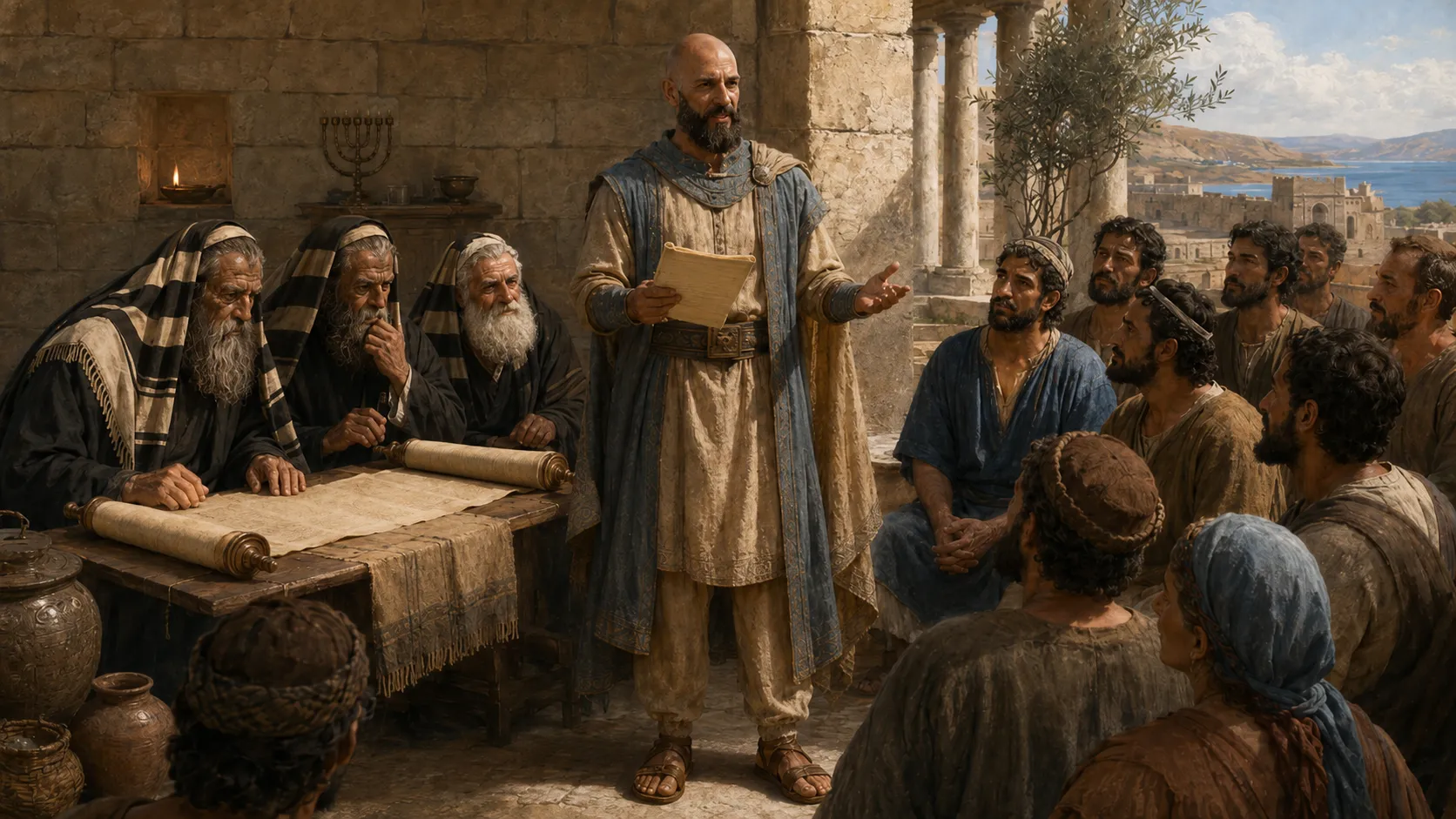
Preface
Paul did not abandon the Tanakh. He could not afford to. To make his theology credible to anyone — Jew or gentile — he needed to root it in the authority of Israel’s Scripture, because Scripture was the only source of authority his audience recognized. So he turned to the text, and where the text supported him, he cited it, and where the text did not support him, he reinterpreted it, reallocated its meaning, or overturned it outright while still invoking its name.
This is the subject of the articles that follow: a systematic comparison of Paul’s readings against the Tanakh itself, on its own terms, without recourse to later Christian commentary, doctrine, or apologetic tradition. The method is simple. State what Paul claims. State what the text he is claiming to build on actually says. Let the distance between the two speak for itself.
That distance would not have been invisible to a Judean of the first century. A Jew trained in Torah, familiar with the covenant at Sinai, the permanence of its commandments, and the terms on which Israel’s relationship with God was structured, would have recognized immediately that Paul was not extending the covenant but dismantling it — that circumcision was not being fulfilled but discarded, that the law was not being honored but declared a curse, that the Sabbath was not being deepened but made optional, that the very definition of who belongs to the covenant people was being rewritten from the ground up. None of this is subtle. It would have been obvious apostasy to anyone who knew the source material.
A gentile with no prior grounding in Torah had no such defense. He could not check Paul’s citations against his own knowledge of the text, because he had none. He took Paul’s word for what the Tanakh said, and Paul’s word was, at critical point after critical point, false to the text. This is not a matter of differing interpretation within a shared tradition. It is the construction of a new claim using the borrowed authority of a text whose actual content contradicts that claim.
The conclusion that follows from this comparison is not that Christianity is Judaism fulfilled, evolved, or superseded. Judaism was not superseded. It continues, unbroken, on its own terms, exactly as it was given. What Paul built is something else entirely — a system with no binding continuity to the covenant it claims to descend from, resting on a reinterpretation of texts that say the opposite of what he needed them to say.
That has a consequence, and it is not a small one. In the framework of Torah itself, this is not the founding of a new and separate faith that simply goes its own way. It is apostasy — a rejection of the covenant dressed in the covenant’s own language. And for those who followed it in good faith, believing they were receiving Israel’s promises, the outcome is worse than error. They are left outside the covenant they believe themselves to be inside of, holding to a structure with no claim on the life to come, following what amounts to a shadow cast by one man’s reading of a text he needed to mean something it does not mean.
What follows is the evidence for that claim, text against text.